A brief guide to the Dordogne and surrounding areas
Gites et locations dans le Massif Central - secteurs Dordogne - Lot - Aveyron - Auvergne
  Fehrienwohnungen und Villas in Dordogne, Lot und im Zentralmassiv
Gites, cottages, holiday accommodation, farmhouse rentals and properties to let in the mountains and valleys of southwest central  France 

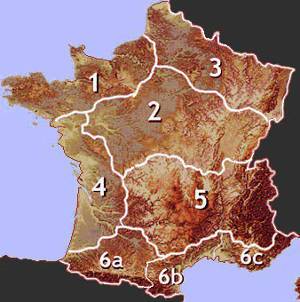
  Clickable map of France - the 6 Gitelink sectors
  Cliquez sur la carte - les six secteurs Gitelink

Loading map of France

Which region to choose? Click here for a brief overview of Gitelink's six French holiday regions
Driving times for this area: from Calais or Lille: 6 to 12 hours under normal driving conditions, depending on destination.
Main airports: Toulouse,  Clermont Ferrand, La Rochelle, Bergerac, Bordeaux, Rodez, Limoges
Airlines serving this region: Flybe  Jet2  Easyjet
Ryanair

Dordogne area Bed and Breakfast
Les chambres d'hôtes en Dordogne 
Return to Gitelink home page

Site information:
This is an information page from the Annuaire Gitelink France directory of gites, holiday cottages and rentals in France

Owners: to add  your gite to Gitelink France:
If you already have a site that presents your gite, send us an email giving details. We will send you further information. 
If you do not have a website, that is no problem, and Gitelink can make, host and reference one for you.

Gitelink also offers a professional translation service for gite owners.

Click here to email

What our customers say:
** " I'd just like to mention that I have been very happy with your service and the bookings that have come through your site." E.M.,  western France
** "We thank you for the service in 2006, and are pleased with the results"
         J.D. Brittany
** "Many thanks for your great service"
         A.R.  South west France

Ajouter votre site sur Gitelink France:
Pour inscrire votre gite, contactez-nous par email avec les détails. Les informations concernant l'inscription vous seront envoyées par retour.  
Si vous ne possédez pas de site web Gitelink peut vous  en créer un et l'héberger   Demander des détails
Environ 130 000 personnes ("visiteurs uniques") devraient surfer sur ce site en 2008 - pour plus de 350 000 pages vues.

Original text © copyright Gitelink 2008
Photo credits:
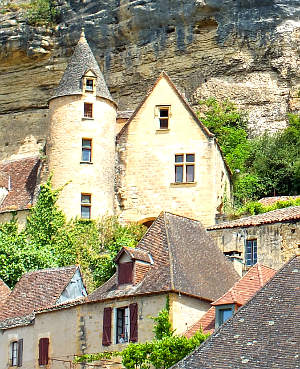
Dordogne:  licence CC,  by Chelmsford Blue
Aveyron (Belcastel): Gitelink.

The Dordogne Valley and surrounding areas

To find a gite or cottage, click on one of these three links: / pour trouver un gite, cliquez....
Gites in Dordogne / Lot et Garonne
Departments  24,  47
Upper Dordogne / Massif Central
Departments 19, 63, 15, 43
Lot , Quercy, Aveyron
Departments 46, 12

What and where is "the Dordogne" ?

Page index
The Dordogne department Périgord Noir The Lot Corrèze & Limousin
Lot & Garonne Quercy The Aveyron Cantal and Auvergne

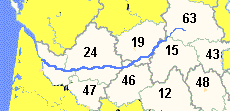
Map of the Dordogne area      For a good many years, British travellers have been fascinated by, 'the Dordogne", an area of France that conjures up an image of a return to rural life at a slow pace; it has even been said that the Dordogne, for the English, is imagined not really as an area of modern France - which it is - but more as an imaginary reproduction of a bygone rural England - which of course it is not - rather like a warmer and sunnier version of the old Cotswolds, where the houses are built of honey-coloured stone, the meadows are green and rich,  the locals all friendly and obliging country folk, and bemused French visitors can actually watch people playing cricket on the green - which indeed they can! Like Tuscany, the word Dordogne has become laden with bucolic symbolism and imagery to such an extent that it is useful to dig well below the surface and clarify what, exactly, the word "Dordogne"  really means, and what this area really is.

      In fact, the word "Dordogne" has two different meanings. In the oldest sense of the word, it is a long river, a tributary of the Gironde that rises in the department of the Puy de Dome, in the mountains of the Auvergne, and flows down through the regions of Auvergne, Limousin, Midi-Pyrénées and Aquitaine.
       The second meaning of the word is a French department (county), the "Département de la Dordogne", surrounding a long stretch of the lower Dordogne between hills and plain.
        Virtually the whole area is attractive hill country, full of old villages, castles, small country towns and plenty of scope for relaxing and enjoyable holidays. Much of the area, particularly further into the hills, is very much "off the beaten track", and just waiting to be discovered.
       
The department of the Dordogne (24)
Dordogne valley       The heart of the "Dordogne" area is, naturally, the department of the Dordogne, centered on its capital Perigueux: the French tend to refer to this area not as "la Dordogne" but as "le Périgord", and in France the area is most famous for its gastronomic delights, notably paté de foie gras, walnuts and truffles. For tourists, the epicentre of this Dordogne is an area known as "le Périgord noir", situated in the south east of the department.  Centered on the town of Sarlat and the river Dordogne, this is the classic Dordogne, with its limestone cliffs, castles (such as Beynac) and picturesque villages such as Domme and Castelnaud, and also its world-famous caves with their prehistoric paintings. There is a museum of prehistory at Les Eyzies, while the grotto at Lascaux boasts the world's most famous prehistoric cave paintings. On account of the damage being caused by tourists, the real Lascaux cave, a UNESCO world heritage site,  was closed to visitors back in 1963, but an exact replica has been carved out underground close to the original location, and the visitor experience is totally authentic. There are other prehistoric caves that can be visited at Font de Gaume and Cap Blanc, and even a prehistoric theme park, Prehistoparc. Perigord Noir is not a mountain region; it is hill country, mostly at an altitude of between 200 and 350, metres.
       West of Perigord Noir lies Périgord Pourpre, the area round Bergerac; this is a low lying area, the limits of the coastal plain, a region most famous for its wines and vineyards. As for the north of the department, this is known as Périgord Vert, Green Perigord, a greener and more undulating region of small villages and farms, streams and rivers.

        Upstream from the Dordogne department, the hills get higher and the valley gets deeper. A traveller moving upstream would reach, in succession, the following departments, which are described in more detail below: Lot, Corrèze, Cantal, Puy de Dome.

The department of the Lot (46)
        The river Dordogne just passes through the northern tip of the Lot department; but this is a department that has also become very popular with visitors from Britain, Holland and other parts, and the Lot valley in particular has acquired an attraction of its own. Like the Dordogne, this is limestone country, and until recent years was actually more off the beaten track than the Dordogne.  The department boasts one of Frances major tourist attractions, the village of Rocamadour, perched up and down a steep cliff face overlooking the valley of the Ouysse. Like the Dordogne, the department has a number of spectacular underground caves, including the Gouffre de Padirac.
        In the north west of the department, the land is higher, rising to 500 metres; but this is still delightful and soft countryside. The capital of the Lot is the beautiful small city of Cahors, famous for its mediaeval streets and its unique surviving 14th century bridge, the Pont de Valentré.
          Cahors was once capital of a region known as the Quercy, which is nowadays made up of virtually the whole of the Lot department, plus part of the Lot et Garonne department to the south west. The name Quercy derives from the Latin word quercus, meaning an oak tree, and naturally this is a region rich in oak forests - not the massive oaks of old England, but smaller oaks of southern Europe.  The Quercy is a limestone plateau, cut through by numerous streams and rivers.

The Department of Corrèze (19)
        Before entering the Lot, the river Dordogne flows through the department of Corrèze, capital Brive la Gaillarde, which is administratively part of the Limousin region. We are now in the Massif Central mountains, and apart from the western tip of the department, most of the Corrèze lies between the altitudes of 600 and 800 metres. With higher hills, the climate is not so dry and hot in summer as the areas to the south west, and Corrèze boasts a fine collection of very beautiful small towns and villages, notably Collonges la Rouge  - so named on acount of the red sandstone from which it is built - Curemonte and Turenne.
        Cutting through the south west part of the department, the river Dordogne passes through some beautiful small towns and villages, such as Beaulieu and Argentat; and north of Argentat, the hills get higher and the valley deeper as the traveller enters the higher reaches of this river, the Dordogne gorges. From near its source in the Puy de Dôme, down as far as Argentat, the Dordogne has cut a deep valley through the mountains. Up above, the plateaux of the western Massif Central offer wide areas of
upland farm country, fields and forests; this is an area which tends to remain green all through the summer, even in the driest of years.

The Cantal (15) and the Auvergne
For a distance of some 30 kms, the river Dordogne forms the border between the Corrèze and the Canal departments, and thus between the Limousin and the Auvergne.  The Cantal, capital Aurillac, really is mountain country, with peaks culminating at over 1800 metres. The Dordogne valley at this point is marked by a series of major dams, such as the Barrage de l'Aigle, providing hydro-electricity to the French grid for over half a century . Behind the dams, in a steep wooded valley, the long lakes offer plenty of opportunity for water sports. The Cantal is reputed to be one of the coolest departments in France, which is not suprising since most of the department lies at over 800 metres. The high peaks of the Cantal, consisting of a massive volcanic area, offer proper hill-walking country, as well as skiing in winter.
    The source of the River Dordogne is in the neighbouring department of the Puy de Dome, at an altitude of almost 1800 metres, on the slopes of the Puy de Sancy, the highest peak in central France.  

The Department of the Aveyron (12)
Belcastel The Department of the Aveyron (capital Rodez) includes much of the central areas of the valley of the Lot, which is an increasingly popular area. It is however a very varied department, running from the low-lying area round Villefranche de Rouergue in the west, an area similar to the Quercy, to the moors of the Aubrac, at 1200 metres, near Laguiole in the north,  the dry uplands of the Causse du Larzac, near Millau in the east, and the rolling agricultural countryside, with its fields and hedgerows, almost English-looking, in a sandstone area known as the Ségala, in the south. The valley of the Lot runs parallel to that of the Dordogne, and generally divides the limestone causses area to the south from the higher mountains to the north. The Lot valley is low-lying compared to the countrside around it; the traditional buildings in this area are roofed with local slate or shale.


To find a gite or cottage, click on one of these three links: / pour trouver un gite, cliquez....
Gites in Dordogne / Lot et Garonne
Departments  24,  47
Upper Dordogne / Massif Central
Departments 19, 63, 15, 43
Lot , Quercy, Aveyron
Departments 46, 12


Gitelink: one of the most visible gîte sites on the Internet

>