
Setting up, opening and running a gite
How to run a rural holiday cottage rental in France
A guide for potential owners
With
Gitelink, rent gites directly from English-speaking owners:
Either.. Search for gites by area lists (click map):
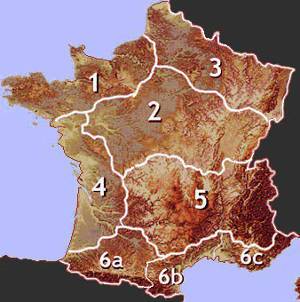
Or browse our interactive regional gites maps
Click for information on the regions of France
Either.. Search for gites by area lists (click map):
Or browse our interactive regional gites maps
Click for information on the regions of France
| On this page: | Buying a gite | Renovation | Profitability |
| Doing it yourself | Rental periods | Advertising |
In the past forty years or so, thousands of people from Britain, the Netherlands, and many other countries - even Australia or the USA - have taken the plunge, and moved to France - for retirement, early retirement or to find a slower pace of life in a rural area. And for many, either before coming, or once arrived, the idea of earning a little money on the side - or even earning a living income - through the opening of holiday accommodation, has seemed an exciting or interesting challenge to be taken up.
Some have been successful, others less so; and for some, the whole venture has quickly turned to disaster. As with most projects - specially those where a certain amount of serious investment is required, opening and running a gite or a group of gites calls in varying degrees for resources, a certain vision, an ability to work with local contractors, a fair degree of self-sufficiency, and plenty of determination to make things work.
Buying a gite
For the person thinking of moving to France, there are two ways to acquire a gite or potential gite; one is to acquire a rural property that is big enough to divide into more than one unit of accommodation - and run a gite that is essentially an extension of the owner's own accommodaiton. The other is to acquire a group of cottages or houses that can be used as multiple gites - the owner living in one of the units, or close by. And in either case, there is the possibility of buying an already-operating gites business, or starting from scratch.How many gites?
Obviously the more units that are acquired or envisaged, the greater the potential rewards when the project finally comes to fruition, but the greater the investment. Establishing a small group of gites has the advantage or reducing the renovation costs per unit, notably by spreading the cost of such features as a swimming pool or other facilities over more than one gite. The downside is that the gites may not have the independence and privacy that many people are looking for when they decide on a gite holiday. But there is another big downside to running multiple gites – one that is often totally overlooked when people are drawing up their plans – and that is "changeovers", the time required for cleaning and preparing for the next visitors. Generally speaking, gite changeover day is Saturday; and while it is not too hard for gite-owners to clean, tidy and reorganise one or two gites between time-out and time-in on a summer Saturday, any more may require the hiring of domestic help or lead to serious logistical problems.
Renovating and equipping a property as a gite
This can be done on the cheap; but it's not the best way to create a gite or gites that bring in the visitors - unless the rental prices are very cheap too. Gites come in all shapes and sizes, from the small and rudimentary (less common these days) to the utterly luxurious; but by far the majoirty lie in the middle – rural accommodation that is able to match the expectations of holidaymakers.Most visitors are looking for a certain degree of comfort, even luxury – which means that gites are best renovated and equipped with a certain degree of good quality. Besides, quality equipment and furniture tend to be more robust than the cheaper stuff, and so will last longer and wear better. It means more investment upfront, but normally better value for the owner in the long run. It is vital not to underestimate the cost of renovating even a "liveable" rural property as a gite, and equipping it to the standard that visitors are going to expect for the price you ask.
Profitability
Running a gite / gites as a profitable venture is not easy, if the intention is to ensure a healthy return on the capital investment – unless the gite is in the league of exclusive luxury properties. On the other hand, if the capital investment can be largely disregarded – which is something that individuals can do, but not companies - then running a gite or gites as a means of ensuring a certain income is less of a challenge.Doing-it-yourself
There are plenty of enterprising gite-owners in France who have done a lot of the renovation work themselves; but renovating a gite can require a good range of skills, not to mention a lot of time, and the complexity and scope of the task should not be underestimated. Any major work will almost certainly need to done by professionals, and their services may be essential when it comes to making sure that renovation work complies with today's building standards, and safety standards, notably with regard to electric installations, swimming pools, ventilation, and so on.The situation is far less complicated for properties that are already in basic working order, but need a superficial makeover to render them clean and attractive for potential guests.
How long can you rent your gite for?
This will depend largely on five factors:- Location : Where the gite is located,
- Pricing: : How much you charge relative to the local going rate (value for money),
- Special features : Whether you have any special selling points (like a spectacular view or location),
- Advertising : How much you are prepared to spend on advertising,
- and once established, Customer loyalty : How many return visitors you can acquire.
Though a word of caution: equipping gites for hire in the winter months may well not be worth the effort. There is a point for most gites at which the extra revenue gathered from off-season visitors will be minimal - if not negative - compared to the cost of catering for these visitors.
Online gite advertising
The first step is to build and host your own website. This is actually very easy; website hosting, including a domain name, can cost less than £50 a year; and many hosting packages now come with free website templates.Having your own website is essential if you want to avoid the increasingly hefty fees charged by the "rentals markets" that will promote your gite for you by putting your details on their own websites. See below. It also allows you to put up all the information and photos you want, for no surcharge, and also to get your site directly visible on Google, which is the no.1 starting point for most holiday purchases.
Once you have you website up and running, then you need to promote it.
Heavy advertising can (but will not necessarily) produce a considerable extension of the letting season, but the profits on low-season rentals cannot be high, given the unfavourable balance between supply and demand.
Listing with "Gites de France" or "Clévacances" is not an obligation, and there are very many gites that are not listed. On the other hand, it will normally ensure good occupancy in the main holiday season, plus a quality label that can be used in promotion: but both come at a cost, for inspection and listing, as well as a sizeable commission (in the range of 15% - 20%) on sales. And it should not be forgotten that a 20% commission on sales is 20% of revenue, not 20% of profit margin; in terms of percentage of actual profit, the figure is considerably greater .
The most cost effective way of advertising gites is to promote your property and your own website on the Internet. There are hundreds of gites directories to choose from, but among them probably no more than a dozen that can guarantee results. Prices vary considerably, with some directories (the online markets) charging up to in excess of £700 / 800 € a year. This may be a necessary cost for people with several up-market high-cost properties to rent; but for hose hiring out just one or two small gites, spending several hundred pounds on advertising may simply not be worth it.
Virtually any directory that has any internet presence should be able to find takers for any gite during the peak weeks between mid July and late August; in most areas, demand is equal to or greater than supply during this six week period. However Internet advertising most important for the off-season visitors that it brings in, not the peak-season traffic; and since rental prices are much lower in the off-peak months, viable advertising costs have to be calculated in respect to the additional income (after expenses and tax) that they can be expected to generate for gite owners during the off-peak months.
There are essentially four types of sites for advertising gites on the Internet.
1. Those that work on commission.
2. Those that charge a fee for listing, but no commission.
3. Those that charge a listing fee and commission (notably Gites de France)
4. Free listings sites
Commission based sites - such as Booking.com or Air BnB - may sound attractive. No sale, no fee.... sounds good. But you are not really wanting a site that makes no sale.... The cheapest commission based sites start at about 10% (Forget the "3% commission" sometimes announced; that's 3%... plus a whole lot more charges which can mount up to 15% or so). 15% isn't too bad if it brings in one or two more bookings in a year; but if it brought in 12 weeks rentals at an average of 600 € per week, you'd be paying commission of 1080 €uros . That's a lot. Sites like hotels.com or booking.com or even Gites de France want to send you lots of traffic, because they'll take lots of commission. But there is no guarantee that they will provide bookings, unless you have rock-bottom prices for your gite.
Fee-based listings
sites :
a) The big ones:
most of the biggest online
rentals sites now belong to a large Texas-based company called Home
Away,
who own - among others - Owners direct, Holiday-Rentals co.
uk,
Abritel, Homelidays, TopRural, Bedandbreakfast .com and a dozen more
online directories - and whose first objective is obviously to maximize
their profit. Given their business model and
their high advertising rates (generally between 200 and 700 Euros a
year), these directories must produce some
results for some advertisers - particularly those that sign up for more
expensive priority listings - but feedback suggests that their results
are extremely variable, and not necessarily any better than smaller
directories. More recent feedback suggests that it may often
be
essential to pay for a premium listing
in order to generate any
bookings on these sites.... making them even more expensiveb) The small ones: Gitelink.com is is a fee-based listing site – but our charges are a fraction of those charged by the bigger more commercial directories; and as a well-established Internet directory, launched in 1999, Gitelink has very good Google search rankings, frequently better than the bigger directories. With far less properties listed, and good visibility on the Internet, Gitelink can ensure good visibility for each property.
For owners who do not have their own website, Gitelink can build and host a custom designed mini site at very competitive rates.
Free sites:
Free online directories. For these, you need to have your own website. These are almost always a total waste of time; as the saying goes, "there's no such thing as a free lunch", Running and advertising a website takes time and money, so why should anyone spend time and money for nothing in return?., Nonetheless there are some free listings sites, particularly regional tourism sites, that generate a few clickthroughs. And why not, if its free ? But most free directories are pretty invisible in Internet terms.
Conventional wisdom suggests that owners should list their properties with at least three or four productive sites, as no single site on its own can guarantee maximum results........ unless your gite/s have a remarkable selling point in their own right. In which case, they should advertise themselves by word of mouth alone. On one expat-targeted French property information site, there is an article suggesting that owners should reckon on spending 1500 € a year on advertising. This is quite way over the top ... or possibly an unintended admission of the lack of effectiveness of some of the more expensive gites advertising sites. A listing with Gitelink can cost as little as £35 a year, and is guaranteed to produce results, given the very favourable ratio of visitors to sites listed; but listing with just a single directory is very unlikely to produce enough customers to fill a gite for a whole season.
Risks of running a gite
They are the same as any other venture. An owner's gite needs to be properly insured, and a proper contract should be signed with those renting a gite, indicating the extent of the owner's liability in the event of mishap and other customary clauses. Obviously, clauses must be legal, and owners should not include clauses to limit their liability beyond legal minima.One serious (though not over-great) risk for new owners is falling victim of a booking scam. See Gite rental booking scams for more detail.
To conclude
Buying, renovating and running a gite or gites can be fun, can be a source of income, and an occupation; but neither the economics nor the risks of the operation should be underestimated. Finally, it is important to remember that running a gite / gites is a job, and in particular one that will keep the owners busiest in the summer holiday period.
Gite or B&B owners:
Advertise your gite on Gitelink France: rates start at £35 or 39 € for 2018
Gitelink is a successful online directory for the promotion of independent gites, country cottages, holiday villas or b&b accommodation in France.
Copyright © Gitelink