

A short guide to Brittany
Essential Brittany - the Gitelink guide
en
français : Guide Bretagne
| Other pages..... |
 Guide Bretagne Guide Bretagne |
|
| Brittany an introduction | The Celtic Tradition | Tourist attractions |
| Cities, towns and areas of Brittany | Brittany travel information | Breton food |
| Maps of Brittany | Brittany climate | Gites map |
Brittany:
where there's room for everyone.
With
2730 kilometres of coastline, Brittany, with its cluster of islands,
has about a third of the total shoreline of France.... but far less
than a third of the total number of seaside holidaymakers. And while
the major resorts like Saint Malo get pretty busy in the tourist
season, even in the height of summer, it is not difficult to
find
small creeks or wide sandy beaches without crowds.Welcome to Brittany - France's Celtic fringe
For many hundreds of years, Brittany has been on the international map for travellers. Long before the age of tourism, this westward province of France, jutting boldly out into the rolling Atlantic, was one of France's major gateways to the rest of the world. Through the region's historic ports such as Lorient, Saint Malo or Brest, seafarers and travellers passed en route to and from the distant corners of the earth. From Breton ports, explorers set out to discover the New world and the Indies; and through these harbours and ports once passed a good proportion of France's foreign trade; coffee and spices from the Orient, furs and tobacco from the new World, and all the products that France sent out to the rest of the world in the days of galleons and clippers.In the middle of the nineteenth century, the arrival of steam trains made Brittany relatively easily accessible from Paris; and being somewhat closer than the South of France, and somewhat milder than the area to the north of Paris, Brittany became a popular region, developing seaside resorts much in the same way as Devon and Cornwall did on the other side of the Channel.

More recently, with the development of international travel, cross-Channel ferry services, high-speed trains and motorways, Brittany has become a region that is very accessible for holidaymakers from neighbouring countries, as well as from the rest of France; and Britttany is now the fourth most popular tourist region in France, and the most popular in northern France. It is also the region of France with the longest coastline - 2730 kilometres or over 1600 miles.
The Breton connection
If the region seems to have particular appeal for tourists and travellers from the UK, the reasons are not hard to discover. In many ways, both culturally and historically, Brittany has more in common with parts of the British Isles than it does with the rest of France. The name itself is a clue to this; Brittany and Britain come from the same root, and in French the connection is even more obvious; the French call Brittany "la Bretagne", and call Britain "la Grande Bretagne" - or "big Brittany", if we translate it litterally. For thousands of years there have been comings and goings across the western reaches of the English Channel, between Brittany and the southwest of England, and many of the Britons who holiday in this western province of France may actually be visiting an area where some of their own distant ancestors came from. Significantly, the centre of the western tip of Brittany is called "Cornouailles", which is also the French for Cornwall.Today, Brittany is one of the administrative regions of France, and covers four French departments, Finistère in the west, Côtes du Nord in the north, Morbihan in the south, and Ille et Vilaine - around Rennes in the east. This is not actually the whole of the historic province of Brittany, as a fifth department, the area around the mouth of the Loire, known as "Loire Atlantique", has been detached from the rest of the region since 1941. Today, this department, whose capital Nantes was once the capital of the whole of Brittany, is attached to the Loire valley administrative region, much to the displeasure of many in Brittany, notably the nationalists. In Brittany, as in the Celtic parts of the British Isles, nationalism is a strong force.
The Breton land

Breton village scene
While the classic image of Brittany's coastline is that of massive Atlantic breakers bursting over defiant granite rocks, Brittany's coastline actually offers a wide range of seashores, from small sandy or pebbly coves to sand dunes and broad sandy beaches; it also offers a wealth of inlets and harbours, making this region the most popular in France with sailing enthusiasts. The south-facing coast of the Morbihan benefits from a particularly mild climate.
Agriculture in Brittany
Along with tourism, agriculture is one of Brittany's other main economic activities; Brittany is one of France's leading vegetable growing regions, with artichokes, cauliflowers, carrots and potatoes among the most important crops; but Brittany, with its mild climate, is also a region well suited to dairy farming and poultry breeding, and butter and chickens are also major regional exports.Brittany's green algae...
On the downside however, over-intensification of agriculture in the Breton countryside has led to major problems of pollution from surface water runoff, and many of the region's streams and rivers suffer from high levels of nitrates and phosphates. On occasions, excessive runoff of agrochemicals into the coastal waters has led to serious but localised cases of algal bloom, with rocks and the seabed getting covered with a mass of seaweed. The problem is now recognised as a serious issue, and hopefully the introduction of new more eco-friendly farming methods will mean that Brittany's agro-pollution problems, which have often made headline news in France, will be a thing of the past.But in 2019, the problem was still causing headaches for the authorities. The worst affected areas are on the north coast of Brittany, near river mouths. But it must be stressed that local authorities work night and day to remove the thousands of tons of green algae that wash up on their beaches, and also that on every coast there are areas that are not affected, and beaches that remain more or less pristine.
Getting to Brittany
Brittany is easily accessible from the UK,Driving times
Direct access via
the Breton ferry ports of Saint Malo and Roscoff.1 to 3 hours driving from the port of Cherbourg
4 to 6 hours driving from Calais or Lille under normal driving conditions, following motorway via Rouen Caen. See Driving in France
Fly to Brittany
Regional airport: Rennes,
Dinard, Brest.
- Check out with RyanairPeripheral airports: Nantes.
Copyright Gitelink 2001 - 2021
Owners : submit your gite for to Gitelink. See listing criteria and information
A Gitelink
guide

Vannes
Traditional
cottages | Places to stay in Brittany |
| ► A choice of attractive holiday cottages in Cotes d'Armor and Finistere - book directly for best rates |
| ► Plenty of Holiday cottages in Morbihan & Ille et Vilaine - enjoy the peace and quiet of rural Brittany |
| Bed & Breakfast in Brittany |
| Traditional small hotels in Brittany |
| Hotels beside the sea in Brittany |
| Brittany tourist office |
| Small campsites in Brittany |
| Check
Brittany Ferries prices Click here for the best online prices and offers direct from Brittany Ferries |

Côtes d'Armor
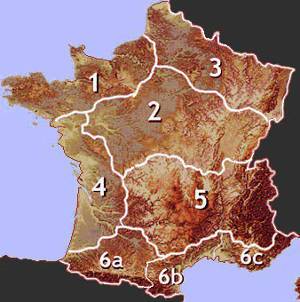
Holiday
cottages throughout France - click
on the
map

Photo
credits - Photos
Gitelink except Photo top of page by Fingers,
Photo of Vannes licenced CC by Jez Atkinson, Stormy coastline
- photo by Guillaumee - licenced CC